
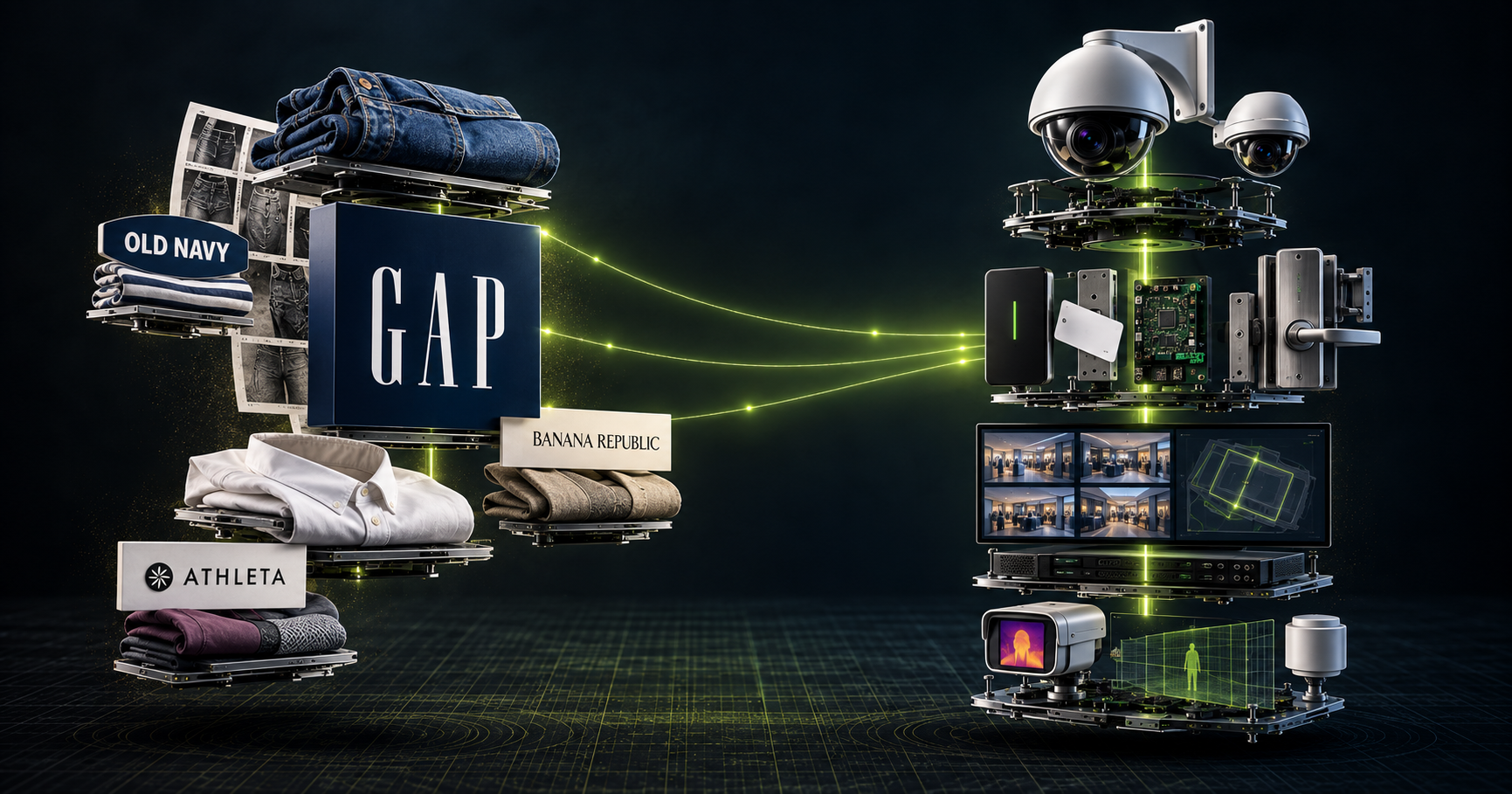
Gap Inc. spent most of the last decade being described as stale. Aging store fleets, brands that had lost their personality, comparable sales that had been negative for years, and a name that had become shorthand in the retail press for how a heritage brand loses its grip. This month it reported a ninth consecutive quarter of positive same-store sales, extended its lead in market share to eight straight quarters across all four brands, and raised its full-year outlook.
According to Fortune, the CEO leading the recovery, Richard Dickson, has a theory that runs against most B2B marketing instincts.
"A brand cannot sell its way out of irrelevance."
Dickson would know. Before Gap, he was the Mattel executive who put Barbie back at the center of pop culture and set up the 2023 blockbuster that came with it.
The interesting thing isn't that Gap is recovering. It's the shape of what Dickson chose to do first.
Gap Inc. isn't one brand. It's four. Gap, Old Navy, Banana Republic, and Athleta each carry a different point of view, for a different customer, at a different price. What Dickson understood coming in was that trying to fix them as a single corporate entity was the trap the previous decade had fallen into. Each brand had lost its own distinctive story and been rolled up into a shared corporate voice that meant nothing to the customer looking for one specific answer. The turnaround is a portfolio play. Restore each brand to what it originally was, and let the corporate parent hold the frame.
Same shape, same three moves, translated to a security manufacturer that has grown through acquisition and now runs a portfolio of legacy brands under one corporate roof. Access control brands with fifty years of specifier trust. Video brands whose product names still get written into RFPs by muscle memory. Intrusion, fire, thermal, credentialing, mobile access, video management, each acquired for a reason, each rolled into a parent identity built around integration, and each having lost, in the process, the distinctive story that made anyone care about it in the first place.
01Find the story each brand already has, and stop apologizing for it
Dickson's first move as CEO was not a rebrand. It was a look back. "Every brand had an origin story," he said at Shoptalk last year, "and it's important to understand what was that origin story." Gap in the 1990s was a music brand. Old Navy was fun and value without making anyone do math. Banana Republic was accessible workwear elevated. Athleta was performance built for women rather than shrunk down from men's. Four different points of view, four different customers, four different reasons somebody chose one over the other.
The current Gap Inc. campaigns with Troye Sivan, Parker Posey, Katseye, and Jennifer Hudson pull directly from those original points of view, brand by brand. They didn't invent four new brands. They found the four that had always been there.
The manufacturer version of this is less glamorous and more common. The average portfolio security manufacturer has been assembled over twenty or thirty years of acquisitions. Somewhere in the archive of each acquired brand is the reason a specifier first started writing it in, the reason a particular integrator built a practice around it, the reason its name meant something to a facilities director whose grandkids are now in the industry. Those stories rarely get carried forward. They get flattened into one corporate voice about unified platforms, and every sub-brand ends up saying the same thing in a slightly different color.
The exercise is straightforward, and it's done brand by brand. Pull the marketing collateral from ten years ago for each acquired brand separately. Pull the earliest customer references you have under each name. Talk to the specifiers who have been writing each one in the longest and ask them, without prompting, what they used to tell their clients about that specific brand. Whatever comes back is closer to the real story than the current shared corporate tagline.
The point isn't to reprint the old catalog. The point is to identify what each brand in your portfolio was distinctive for once, and to stop letting a unified spec sheet flatten all of them into the same paragraph. Heritage brands inside a portfolio usually have four different founding convictions that got rolled into one.
02Put someone senior in charge of holding the brands apart
Dickson's second move was hiring Zac Posen, a fashion designer with 25 years of red carpet work, as creative director of Gap Inc. and chief creative officer of Old Navy. Two titles, on purpose. Posen holds the corporate frame at the parent level and one specific brand's creative identity at the operating level. His remit, in Dickson's words, is being "a cultural curator and creative partner" to the CEO, with a mandate that spans the portfolio.
Gap Inc. already had a CMO. Every major retailer does. The point of Posen wasn't to replace marketing operations. It was to install a senior partner to the CEO whose entire job was making sure the four brands stayed distinct from each other, stayed distinct from the corporate voice, and stayed relevant to their own customers.
Most portfolio security manufacturers don't have this role, and the effect compounds. The corporate CMO owns demand generation, event budgets, channel enablement, product marketing across every sub-brand, PR, digital, and social. On paper the CMO also owns the brand architecture. In practice, the brand architecture gets whatever hours are left after the pipeline meeting, and the path of least resistance is always consolidation. Shared taglines. Shared decks. Shared booth design with sub-brand logos arranged in a row on the back wall.
A creative partner at the executive level, external, unmovable, and reporting to the CEO, is the closest thing to a shortcut in this category. It doesn't need to be a Zac Posen. It needs to be someone whose only KPI is whether the industry recognizes each of your brands in the hallway at ISC West or GSX without having to check which corporate parent they belong to. Someone with veto power over what leaves the building under any of the sub-brand names. Someone who can tell the CEO no when the pressure inside the company is to consolidate for efficiency.
The role only works if it reports at the top. A brand director filed under the VP of Marketing gets outvoted by the pipeline number every time, and every time the pipeline wins, another sub-brand loses another degree of distinctiveness.
03Buy relevance brand by brand, not corporate reach
Dickson has been direct about the rest of the play. Instead of pouring budget into promotional discounting and corporate-level paid reach, Gap Inc. started investing in cultural moments earned brand by brand. Kendall Jenner in a Gap gown at the Met Gala. Katseye and Troye Sivan in Gap dance ads that pull from the brand's music heritage. Jennifer Hudson fronting Old Navy. Athleta building the fastest-growing fitness presence on TikTok. Collaborations with Madhappy, Cult Gaia, and DÔEN under specific banners rather than under the corporate parent.
None of that has a clean click-through attribution, and none of it aggregates neatly at the corporate level. That's the point. "If you're relevant enough," Dickson said, "it eventually drives revenue." The relevance is earned brand by brand, in the language of each brand's customer, not at the corporate umbrella.
For a portfolio security manufacturer, this is the hardest argument to accept, because attribution and efficiency both pull toward the parent. Every dollar has to trace to a lead source. Every campaign has to show a pipeline number. Media buying at the corporate level is cheaper per impression than four separate brand-level programs. What that discipline leaves out is simple.
Specifiers and integrators don't buy the parent. They buy the sub-brand. They spec the sub-brand. They train their techs on the sub-brand.
They have opinions, sometimes strong opinions, about each sub-brand individually, and those opinions are rarely about the corporate identity above it.
Some percentage of the budget has to be spent on each sub-brand becoming the one people talk about after the show, in its own category, to its own audience. A cross-portfolio corporate campaign at ISC West doesn't do that. Four brand-specific presences, each earning its own relevance with its own community, does. That looks like a genuinely different booth for each brand rather than one shared corporate booth. It looks like a trade press feature story about one sub-brand's specific point of view, not about the parent's integration story. It looks like a sponsored dinner where the guest list is the specifier community for one specific category, not a mixed audience across the whole portfolio.
None of that is measurable in the quarter it happens. All of it compounds, brand by brand.
The order is the point
The Gap turnaround runs against the instinct of most portfolio manufacturers under pressure. When the numbers go the wrong way, the obvious moves are consolidation, shared services, shared taglines, corporate demand gen, and a bigger paid budget at the parent level. Dickson's argument is that the consolidation is the problem, not the answer.
Find what each brand in your portfolio actually was. Put someone senior in charge of holding them apart. Spend real money on relevance brand by brand before you spend it on corporate reach. Only then does the operational and financial rigor Dickson also talks about produce results, because it's flowing through four brands people remember rather than one parent identity they've stopped looking at.
The sequence matters because it runs against the pressure inside every portfolio marketing department. It's easier to defend one shared budget than four brand-specific ones. It's easier to argue for a corporate lead gen tool than for a creative partner in the C-suite whose job is keeping the brands distinct. It's easier to spend the quarter consolidating than on the slower work of remembering what each brand ever meant to the specifier who kept writing it in.
Every quarter spent on the easier moves is a quarter the industry has to keep not-thinking about any of your brands specifically.