
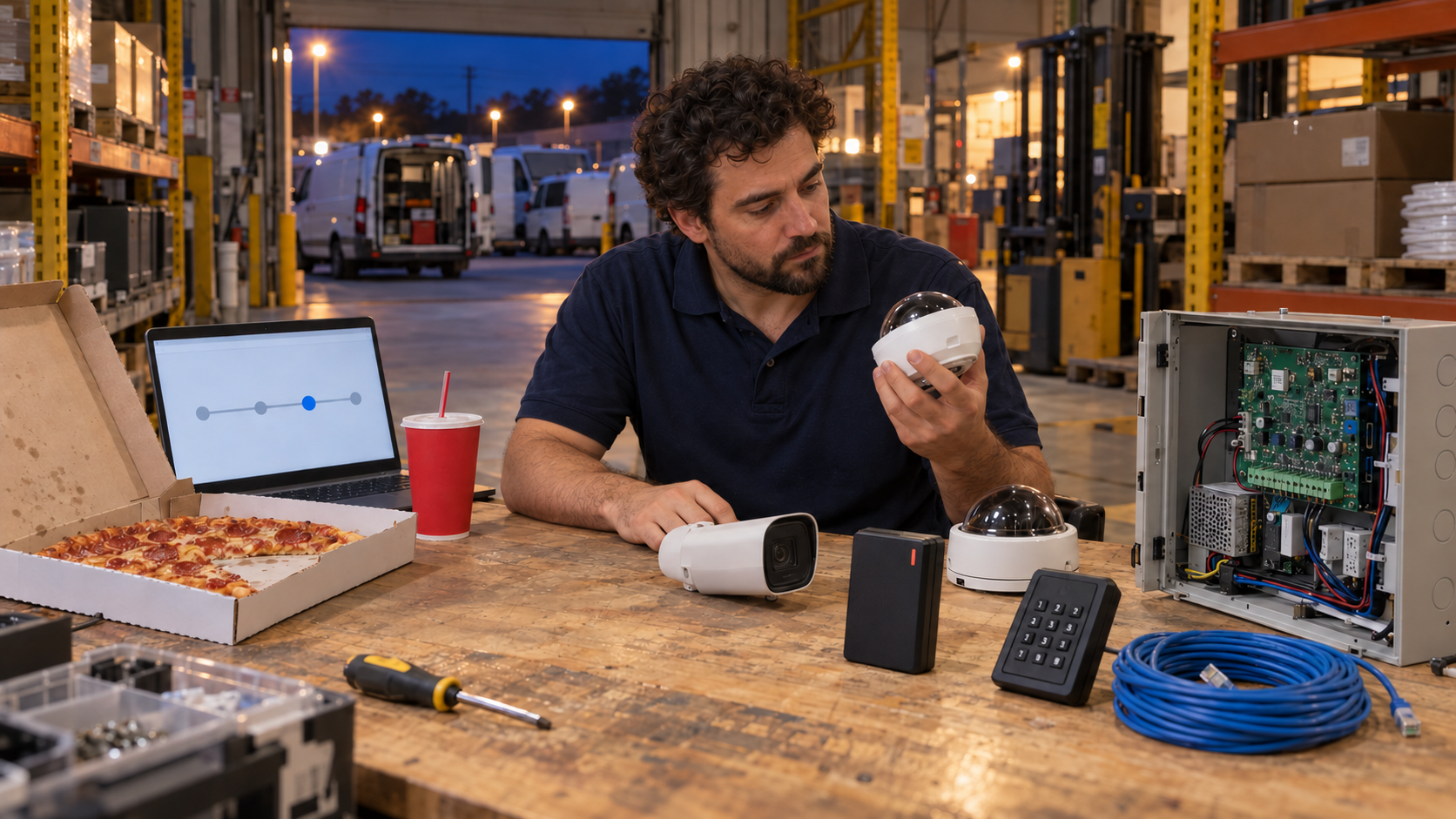
Somewhere tonight, the owner of an integration company is going to order a pizza and watch a little progress bar tell him it's in the oven, then on the rack, then in the car. Tomorrow morning he'll be back at his desk, ordering panels and readers for a job that starts next week. He'll bring the same expectations with him.
Security has always been sold as a rational purchase, and it is one. Specs matter. Certifications matter. Nobody picks an access control platform because an ad made them feel something. But the people who specify, approve, and install security spend the rest of their lives as consumers, and the brands they deal with outside of work have quietly reset what "easy" and "trustworthy" feel like.
B2B and B2C used to be two different disciplines. They're converging, and security is no exception.
That's an opportunity. Here's what security companies can borrow.
01Sell the outcome the person cares about
Nike doesn't sell shoes. It sells the version of you that goes for the run. The shoe is the proof.
In security, the person across the table isn't really buying a camera or a reader. The integrator is buying a clean install, a service contract that renews, and a customer who doesn't call at 2am. The facilities director is buying a board meeting where nobody asks why something happened. The school superintendent is buying the ability to tell parents, with a straight face, that the building is safe.
Specs are how they justify the decision. Outcomes are why they make it.
Try this: Take your top three product pages and write one sentence for each describing what changes in the buyer's week after they buy. Put that sentence at the top. The specs can stay right below it.
Then tell stories with real people in them. An integrator's project manager explaining how a job came in two days early. A campus security director describing the first semester on a new system. Named, photographed, quoted. That's the content a buyer forwards to their boss.
02Make every step of buying feel effortless
Domino's likes to call itself a technology company that happens to sell pizza. The Pizza Tracker didn't make the pizza any faster. It made the wait feel handled.
Security buying involves a lot of waiting and a lot of questions. Where's my quote? Is that SKU in stock? Which firmware is current? Who's my rep now?
Every one of those questions is a chance to feel like a consumer brand. A few that are within reach for most companies: a partner portal where an integrator can check order status, lead times, and pricing without sending an email. Documentation and firmware that are findable in two clicks. A website that answers "does this work with what I already have" before anyone fills out a form. A named person who responds the same day.
None of this is flashy. All of it is marketing. The integrator deciding which lines to carry is keeping score, whether they say so or not.
03Treat brand as risk reduction
Consumer brands use brand to justify a premium. In security, brand does something even more valuable. It lowers the perceived risk of the decision.
The person specifying your product is putting their name on it. If it fails, it's their call that gets questioned. A brand that looks current, sounds consistent, and shows up the same way on LinkedIn, at GSX, in the inbox, and on a sell sheet in the back of a truck tells that person something important: this company has its act together, and so will the product.
Apple is the obvious example. The box, the store, the website, and the setup screen all feel like they were made by the same people. That consistency is part of why people trust what's inside.
Try this: Lay your booth graphics, your homepage, your latest email, and your datasheet side by side. Do they look like one company? If a stranger can't tell, a buyer can't either.
04Make content people want, not just content they need
Datasheets are necessary. Nobody has ever shared one.
The consumer brands that win online make things people pass along: a video that's fun to watch, a piece that teaches something, a story with a point. Red Bull built a media company. Blendtec built a franchise out of putting a garden rake in a blender.
Security companies have more of this material than they realize. Destructive testing. Installs in places nobody else gets to see. The integrator who wired a stadium over a weekend. The tech who figured out how to run cable through a 100-year-old building without touching the plaster.
Keep producing the technical content. Then put some energy into the stuff a busy integrator watches on a phone between jobs and sends to a colleague.
05Build a community your customers want to belong to
Harley-Davidson started the Harley Owners Group in 1983. It gave riders a reason to show up together, and those riders became the most loyal marketing department a brand has ever had.
Security is already a community. The integrator world runs on relationships, referrals, and who you sat next to at dinner during the trade show. Companies that lean into that, instead of just attending it, earn a kind of loyalty no ad buys.
Ways in: partner councils that meet regularly and shape what comes next. Customer events built around learning, not just a product rollout. Spotlighting integrator work on your channels, with their name and logo front and center. Giving your best partners a stage: a webinar, a panel, a case study where they're the hero.
When your customers tell the story, it travels farther and gets believed faster.
The bottom line
Security will always be a considered purchase. That isn't changing, and it shouldn't. The engineering, the certifications, and the spec sheets are the foundation.
What's changing is everything around them. Buyers expect the purchase to feel as easy as the rest of their lives, and they trust the companies that make them feel understood.
B2B and B2C aren't two playbooks anymore. They're becoming one. The security companies that see that early get to write their chapter of it.